Monday, 30 September 2013

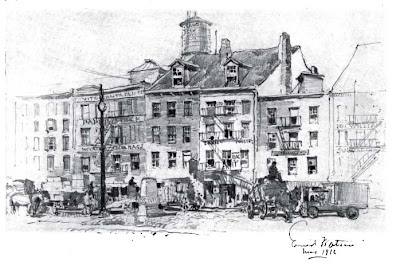
Pencil Sketches Of Sceneries Of Nature Of Sceneries Landscapes Of Flowers Of Girls Of People Tumblr Of Roses Of Eyes Of Love

Pencil Sketches Of Sceneries Biography

source(google.com.pk)
Have a look at these beautiful drawings. Some of them are so realistic that you might mistake them for a photography. The author of this romantic scenes from an everyday life is Randy Hann. He draws mostly children, nature, animals and lovely scenery. You will not remain indifferent because these pictures are so warm and moving and show captions from a harmonious family life, probably his own. Below you will find some info about the authors biography.

Randy was born in 1961, in Twillingate, Newfoundland. During his early teen years he moved, with his family, to Toronto, Ontario. After several years of living and working in Toronto, he met and married his wife Tracey. They eventually moved back to Newfoundland with their two children. Randy can always remember being able to draw, even as a child. Whether it was a funny portrait for a friend or a special school project, he always got the call. He didn’t really take his ability to draw seriously until years later. Being entirely self-taught, Randy has taken many years developing and refining his technique and style. He loves to draw and paint but his passion is for drawing. Most of his finished works are graphite on paper. Randy’s inspiration is found in his own family life and in the picturesque place where he lives. Both play a very important part in his work and are evident in many of his drawings and paintings. He has interest in a wide variety of subject matter including people, wildlife, scenery, and portraits. Randy’s work has been exhibited in several solo and group shows and, on many occasions, he has supported special charitable organizations by donating his work for sale or auction. His work can be found in many private collections across Canada and in other countries. Randy now lives and works in Carter’s Cove, Newfoundland , where he shares his love for life, art, music, and nature with his family.

During art class in high school she experimented with different mediums. First in watercolor, acrylic then oil. She eventually took up oil because of the rich color it produces. She sold her first painting then.


As a child she always wanted to make a living as an artist. Now she's taken up art as a full time job...her dream. She loves both nature and art so to work with them together just make sense. She does field work as much as possible for inspiration, and enjoys visiting Algonquin Provincial Park. Now that she resides in Barrie, Ontario, the park is not very far from her home.


After the birth of her first child she has taken up portraiture to a much greater extent. Recently she has discovered how beautiful chalk pastel can be on the right paper. It works well for portraits because of the many flesh tones available.

She also loves to do pet portraits. She has always had a family pet and does believe what is said "dogs are man's best friend."
She has exhibited in a number of shows including Cobourg Waterfront Festival, Pelham Art Festival, Kempenfest in Barrie and the All About Pets Show at the International Center in Toronto.
Terms of Access and Use
Restrictions on access:
There is no restriction on access to the collection for research use. Particularly fragile items may be restricted for preservation purposes.

Restrictions on use:
Requests for permission to publish material from the collection should be directed to the Archives and Special Collections. It is the responsibility of the researcher to identify and satisfy the holders of all copyrights.

Preferred Citation
Please use the following format when citing materials from this collection:

[Identification of item], in Henry J. Van Lennep (AC 1837) Sketches and Papers [Box #, Folder #], Amherst College Archives and Special Collections, Amherst College Library.

History of the Collection

Additional Information
Contact Information
Amherst College Archives and Special Collections
Robert Frost Library
PO Box 5000
Amherst, MA 01002-5000

Phone: (413) 542-2299
Fax: (413) 542-2692
Email Reference Form: http://www.amherst.edu/library/archives/askus
URL: http://www.amherst.edu/library/archives

Language
English and Armenian
Related Materials
Alumni Biographical Files - Class of 1837 - Van Lennep
Historical Manuscripts Collection (four letters and one valedictory address)
Edward and Orra White Hitchcock Papers (12 letters)
Miscellaneous artifacts collected by H. J. Van Lennep (transferred to the Mead Art Museum, 2009)

Contents List
Series 1: ARTWORK
1834-1876 and n.d.


Series 1, ARTWORK, consists of eleven bound sketch albums and numerous other sketches on loose sheets, made by Van Lennep when he lived as a missionary in Turkey. Most are pencil on paper, with some in watercolor, and depict people, scenery, and objects. One scrapbook includes not only artwork, but also several articles written by Van Lennep in 1876.

Portrait of young girl - pencil sketch (in frame)
1834

Box 2: folder 3
Pencil sketches, loose
ca. 1844

Box 1: folder 1
The American barque "Sonia," Capt. Henry King, entering Boston Bay (framed)
1849

Box 2: folder 4
Sketch: "View of Bebek," Constantinople
1851

Box 1: folder 2
2 watercolor sketches, [Constantinople]
1851, n.d.

Box 2: folder 1
Sketch album: "Plan et modeles"
185[9?]

Box 1: folder 3
Sketch album no. 3
1859

Box 1: folder 4
Sketch album no. 6: "Cahier de dessins de Chasses"
1859

Box 1: folder 5
Sketch album: "Copies"
1861

Box 1: folder 6
Pencil sketch: boulder, Whitinsville [Mass.?]
1863 Aug 24

Box 1: folder 7
Sketch album: "Voyages," Marseilles
1863-1864

Box 1: folder 8
Pencil sketch: vineyard
1864

Box 1: folder 9
Sketch album no. 9
1864

Box 1: folder 10
Sketch album
1864-1865

Box 1: folder 11
Sketch album no. 8
n.d.

Box 1: folder 12
Hedgehog study - watercolor
n.d.

Box 2: folder 2
Watercolor drawings of Turkish people
n.d.

Box 1: folder 13
Pencil sketch album
n.d.

Box 1: folder 14
Sketch album: artifacts, pottery, ancient sculpture, etc.
n.d.

Box 1: folder 15
Watercolor drawing: child with cane (framed)
n.d.

Box 1: folder 16
Scrapbook containing 1876 articles by Van Lennep and undated pencil sketches
1876, n.d.

Box 1: folder 17
Pencil sketch: carpet pattern
n.d.

Box 1: folder 18
2 watercolor drawings: miscellaneous scenes
n.d.

Box 1: folder 19
Series 2: PAPERS
1840-1879 and n.d.


Series 2, PAPERS, chiefly includes passports, a notebook of sermons in Armenian, and portrait photographs.

Miscellaneous printed matter, including Dutch passports (1869) and prospectus for Sedgwick Institute, Great Barrington, Mass. (1879)
1869-1879

Box 1: folder 20
Notebook: sermons in Armenian - vol. 1, Tocat
1859-1860

Box 1: folder 21
Photographs: portraits of Henry van Lennep and brothers
ca. 1840-1885

Box 1: folder 22
Sheet of various wax seals
[post-1862]

Box 1: folder 23
Book: Travels in Little-Known Parts of Asia Minor: with Illustrations of Biblical Literature and Researches in Archaeology, by Henry J. Van Lennep (London: John Murray, 1870) [duplicate copy; see also catalogued copy at 915.2 V26t Arch/SpColl]
1870

Box 1: folder 24

Search Terms
The following terms represent persons, organizations, and topics documented in this collection. Use these headings to search for additional materials on this web site, in the Five College Library Catalog, or in other library catalogs and databases.
Subjects
Missionaries -- Turkey.
Turkey -- Social life and customs.
Contributors
Sedgwick Institute.
Van-Lennep, Henry J. (Henry John), 1815-1889.
BARTLETT, WILLIAM HENRY, illustrator; b. 26 March 1809 in Kentish Town (London), second son of William and Ann Bartlett; d. 13 Sept. 1854 off Malta and was buried at sea.

William Henry Bartlett, the son of middle-class parents, attended a boarding-school in London from 1816 to 1821 and in 1822 was apprenticed to the architect and antiquarian, John Britton, whose establishment in the parish of St Pancras (London) offered the boy an education that was both theoretical and practical. Bartlett studied and copied architectural drawings of the past and present and, with Britton, visited noted ruins in England from which he made detailed sketches to be engraved for some of Britton’s own publications. At first these sketches were purely architectural, as drawings in the last volume of Britton’s five-volume The architectural antiquities of Great Britain (London, 1807–26) attest. Later, the quality of Bartlett’s sketches and his interest in landscape, especially obvious in some of the water-colours which he did about 1825 of Thomas Hope’s home at Deepdene, Surrey, led Britton to undertake publication of Picturesque antiquities of the English cities (London, 1836).

Bartlett continued to work for Britton as a journeyman after his apprenticeship ended in 1829, although he also provided sketches for other London publishers. On 6 July 1831 he married Susanna Moon and thereafter his career was increasingly directed towards providing a livelihood for himself, his wife, and their five children. One of his first major assignments was to supply illustrations for Dr William Beattie’s Switzerland illustrated (London, 1836), published by George Virtue. He sent 108 sketches in pen, pencil, and sepia wash to engravers who had been trained by the artist Turner, and they etched them on steel plates for Virtue. The thousands of prints made from these plates are proof of Bartlett’s success in catering to the popular taste for picturesque landscape and the sublimity of mountain scenery. For the rest of his life Bartlett’s travels were extensive and continuous, and they led to illustrations for works on Syria, the Holy Land and Asia Minor, the Mediterranean coast, northern Italy, the Netherlands and Belgium, Scotland, Ireland, the coastal areas of Britain, the Bosphorus, the Danube, the United States, and Canada. Bartlett became an accomplished traveller.

According to Britton and Beattie, Bartlett visited North America four times: 1836–37, 1838, 1841, and 1852. From the summer of 1836 to July 1837 he was in the United States acquiring illustrations for Nathaniel Parker Willis’s American scenery (1840), and in the summer and autumn of 1838 he was in the Canadas sketching for Willis’s Canadian scenery illustrated (1842) .

Although little is known about Bartlett’s itinerary in North America, a map in American scenery suggests that his travels during 1836–37 began in New York City and took him north to the White Mountains, N.H., west to Niagara Falls, N.Y., and south to Washington, D.C. His itinerary in the Canadas in 1838 and the observations he may have made also remain obscure because none of his letters from this period has been found. His route appears on a map in Canadian scenery illustrated: he seems to have travelled from Quebec City westward to Niagara Falls, and then by way of the Erie Canal to visit Willis at Owego, N.Y., before sailing for England in December 1838. No written record survives of Bartlett’s visit to the Maritimes. The dates of the engravings in Canadian scenery illustrated seem to indicate that he went there in 1841 after another visit to the United States.

Willis’s texts for the two volumes are undistinguished, a major portion of the book on British North America having been drawn from the works of authors such as Pierre-François-Xavier de Charlevoix*, George Heriot*, James Pattison Cockburn*, and Catharine Parr Traill [Strickland*]. However, the five-by-seven-inch sepia sketches which Bartlett provided have remained popular. Their popularity owes much to Bartlett’s attention to architectural detail as a result of his training in England, to his experiences during his travels, and to his own penchant for the picturesque and sublime in landscape. His was an art which appealed to viewers content to be passive spectators of engravings of scenes easily recognizable from their own experience or reading. It was an art which, reflecting the theories of William Gilpin and Edmund Burke, emphasized the irregular and rough, light and shadow, ruined buildings and vast mountains, wild river reaches and towering crags.

Above all, Bartlett’s landscapes were readily identifiable. All but 6 of the 120 engravings in Canadian scenery illustrated have a specific geographic location. As a result, Bartlett’s sketches have considerable historical value, for they depict the country and its people as they appeared in 1838 to one with an eye for the picturesque. Nearly 100 of the engravings show rivers, lakes, rapids, and waterfalls, and many of them capture the daily life of the Canadian people: the growth of settlement; the presence of British army units; travel by canoes, sailing boats, and early steamships; the timber trade with rafts on the Ottawa River; mills on the Rideau River and at Sherbrooke, Lower Canada; fish markets and waterfronts; the excavation for the Cornwall Canal; and, especially, the homes of the people, from the pioneer log shanty in Upper Canada to Judge Thomas Chandler Haliburton*’s comfortable frame bungalow in Windsor, N.S. As with Canadian scenery illustrated, Bartlett’s sketches had ensured the popularity of American scenery. The illustrations in the latter are similar in style; their content, distinctively American, shows the economic advance of the eastern United States over Upper and Lower Canada.

Bartlett was both author and illustrator of numerous other works, including two books about the United States for which he undertook a fourth visit to North America in 1852. The Pilgrim Fathers (1853) contains steel engravings and woodcuts, and The history of the United States (1856), completed by Bernard Bolingbroke Woodward after Bartlett’s death, has 31 steel engravings, all of which had appeared in Canadian scenery illustrated or American scenery. The first of these works is more scholarly, containing original chronicles of the Pilgrims. Bartlett’s contribution to the second is an elementary textbook which pays scant attention to identification of source material or analysis of cause and result. His own travels in America, however, enabled him to describe locations with facility and to sustain a realistic narrative. His prose is workmanlike and often effective, demonstrating the effects of his employment from 1849 to 1852 as editor of Sharpe’s London Magazine. He continued to accept commissions for illustrations from his London publishers and died during his return from a sketching trip in Turkey and Greece, probably of cholera.

William Henry Bartlett was a warm-hearted, sensitive, rather reserved Englishman who was devoted to his family and to a small number of intimate friends among whom was his biographer, William Beattie. Because he was willing to subordinate his artistic talent to the needs of his major publisher, George Virtue, and to the contemporary taste for picturesque topographical illustration, Bartlett failed to achieve significant standing as an artist. Consequently his art seems inferior when compared with the best work of Cockburn, Heriot, or James D. Duncan*. But his skill in sketching architectural detail, his love for picturesque landscape, and his interest in the life of the people of Canada gave to his illustrations in Canadian scenery illustrated – and also in American scenery – a historical importance that merits their survival.

Alexander M. Ross

[William Henry Bartlett’s drawings are housed at the PAC, Art Gallery of Ontario (Toronto), National Gallery of Canada (Ottawa), McLaughlin Library, Univ. of Guelph (Guelph, Ont.), and in England at the British Museum (London), Minet Library (London), Northampton Public Library (Northampton), and Victoria and Albert Museum (London). Engravings done from his drawings depicting North American scenes were published in N. P. Willis, American scenery; or land, lake and river illustrations of transatlantic nature, from drawings by W. H. Bartlett . . . (2v., London, 1840) and in Canadian scenery illustrated, from drawings by W. H. Bartlett (2v., London, 1842; repr. Toronto, 1967). Bartlett himself wrote and illustrated 12 books, including The Pilgrim Fathers; or, the founders of New England in the reign of James the First (London, 1853), as well as the first three sections of the first volume of The history of the United States of North America; from the discovery of the western world to the present day (3v., New York, [1855–56]), the remaining sections of which were completed by Bernard Bolingbroke Woodward. A full list of the books written or illustrated by Bartlett can be found in A. M. Ross, William Henry Bartlett, artist, author, and traveller . . . (Toronto, 1973), which also republishes the biography of the artist written by his contemporary, William Beattie, Brief memoir of the late William Henry Bartlett . . . (London, 1855).  a.m.r.]

John Britton, The autobiography of John Britton . . . (3v., London, 1849–50). DNB. Harper, Early painters and engravers. Michel Brunet et J. R. Harper, Québec 1800, W. H. Bartlett: un essai de gravures romantiques sur le pays du Québec au XIXe siècle ([Montréal], 1968). Gérard Morisset, Peintres et tableaux (Québec, 1936). Janice Tyrwhitt, Bartlett’s Canada; a pre-confederation journey, intro. H. C. Campbell (Toronto, 1968). John Britton, “Mr. William Henry Bartlett,” Art-Journal (London and New York), 1
Pencil Sketches Of  Sceneries  Of  Nature Of  Sceneries Landscapes Of  Flowers Of  Girls Of  People Tumblr Of Roses Of  Eyes Of  Love  

Picasso Pencil Sketches Of Nature Of Sceneries Landscapes Of Flowers Of Girls Of People Tumblr Of Roses Of Eyes Of Love

Picasso Pencil Sketches Biography

source(google.com.pk)
The Picasso Erotique show was last exhibited in Barcelona, Spain, after a successful run in Montreal, Canada. The show drew hundreds of thousands of visitors in a handful of cities, and has inspired people the world over. Below is an excellent review prepared by the Montreal Museum of Fine Arts. For complete coverage (including media reviews of the show) of this show, have a look at our special page.

The selection of more than 350 works - many rarely, if ever, exhibited publicly before due to reasons of censorship - spans the artist's entire career and includes paintings, prints and drawings, sculpture and ceramics. Together, these reveal the profound, persistent and remarkably varied role that erotic imagery, ideas and experiences played in Picasso's work - from the bordello scenes of his youth in Barcelona to the epochal Les Demoiselles d'Avignon (sketches for which are included in the exhibition) and the nudes he produced at the age of ninety. As Picasso himself once stated, when asked about his views on art and sexuality, "They're the same thing."

Garnered from more than forty public and private collections worldwide, the exhibition features erotic works representative of virtually all the phases and styles of Picasso's career. Drawn from personal experience, imagination, mythology and earlier art, these images - by turns humorous and melancholic, enraptured and enraged - explore an almost encyclopedic range of sexual impulses, practices and human desire.

"Given the enormity of Picasso's oeuvre and influence, it is remarkable that up to now there has been no full-scale, major museum exhibition devoted to the central importance of erotic subject matter in his art," stated Museum Director Guy Cogeval. "Fascinating and often stunningly beautiful in and of themselves, these works will provide a long-overdue contribution to our understanding of the greatest artist of the twentieth century - and, indeed, of the nature of the artistic process and of creativity itself. It is most appropriate that this historic exhibition should take place at the Montreal Museum of Fine Arts, which in the past has hosted such important displays of Picasso's work as Picasso and Man (1964) and Pablo Picasso: Meeting in Montreal, organized in collaboration with Jacqueline Picasso, the artist's last wife."
Pablo Ruiz y Picasso, known as Pablo Picasso (Spanish: [ˈpaβlo piˈkaso]; 25 October 1881 – 8 April 1973) was a Spanish painter, sculptor, printmaker, ceramicist, and stage designer who spent most of his adult life in France. As one of the greatest and most influential artists of the 20th century, he is known for co-founding the Cubist movement, the invention of constructed sculpture,[2][3] the co-invention of collage, and for the wide variety of styles that he helped develop and explore. Among his most famous works are the proto-Cubist Les Demoiselles d'Avignon (1907), and Guernica (1937), a portrayal of the German bombing of Guernica during the Spanish Civil War.
Picasso, Henri Matisse and Marcel Duchamp are regarded as the three artists who most defined the revolutionary developments in the plastic arts in the opening decades of the 20th century, responsible for significant developments in painting, sculpture, printmaking and ceramics.[4][5][6][7]
Picasso demonstrated extraordinary artistic talent in his early years, painting in a realistic manner through his childhood and adolescence. During the first decade of the 20th century, his style changed as he experimented with different theories, techniques, and ideas. His revolutionary artistic accomplishments brought him universal renown and immense fortune, making him one of the best-known figures in 20th-century art.
Contents  [hide]
1 Art
1.1 Before 1901
1.2 Blue Period
1.3 Rose Period
1.4 African-influenced Period
1.5 Cubism
1.6 Classicism and surrealism
1.7 Later works
2 Life
2.1 Early life
2.2 Career beginnings
2.3 Personal life
2.3.1 War years and beyond
2.4 Death
2.5 Children
3 Political views
4 Artistic legacy
4.1 Recent major exhibitions
5 See also
6 Notes
7 References
8 External links
8.1 Essays
8.2 Museums
Art

“ Art is a lie that makes us realize the truth. ”
 
— Pablo Picasso[8]
Prolific as a draftsman, sculptor, and printmaker, Picasso's primary medium was painting. He usually painted from imagination or memory, and worked in many different styles throughout his career. Although he used color as an expressive element, he relied on drawing rather than subtleties of color to create form and space. A nanoprobe of Picasso's The Red Armchair (1931) by physicists at Argonne National Laboratory in 2012 confirmed art historians' belief that Picasso used common house paint in many of his paintings.[9]

La Vie (1903), Cleveland Museum of Art

The Old Guitarist (1903), Chicago Art Institute


Pablo Picasso, 1905, Garçon à la pipe, (Boy with a Pipe), Rose Period


Les Demoiselles d'Avignon (1907), Museum of Modern Art, New York
Picasso’s work is often categorized into periods. While the names of many of his later periods are debated, the most commonly accepted periods in his work are the Blue Period (1901–1904), the Rose Period (1905–1907), the African-influenced Period (1908–1909), Analytic Cubism (1909–1912), and Synthetic Cubism (1912–1919).
In 1939–40 the Museum of Modern Art in New York City, under its director Alfred Barr, a Picasso enthusiast, held a major retrospective of Picasso's principal works until that time. This exhibition lionized the artist, brought into full public view in America the scope of his artistry, and resulted in a reinterpretation of his work by contemporary art historians and scholars.[10]
Picasso was exceptionally prolific throughout his long lifetime. The total number of artworks he produced has been estimated at 50,000, comprising 1,885 paintings; 1,228 sculptures; 2,880 ceramics, roughly 12,000 drawings, many thousands of prints, and numerous tapestries and rugs.[11]
Before 1901
Picasso’s training under his father began before 1890. His progress can be traced in the collection of early works now held by the Museu Picasso in Barcelona, which provides one of the most comprehensive records extant of any major artist’s beginnings.[12] During 1893 the juvenile quality of his earliest work falls away, and by 1894 his career as a painter can be said to have begun.[13] The academic realism apparent in the works of the mid-1890s is well displayed in The First Communion (1896), a large composition that depicts his sister, Lola. In the same year, at the age of 14, he painted Portrait of Aunt Pepa, a vigorous and dramatic portrait that Juan-Eduardo Cirlot has called "without a doubt one of the greatest in the whole history of Spanish painting."[14]
In 1897 his realism became tinged with Symbolist influence, in a series of landscape paintings rendered in non naturalistic violet and green tones. What some call his Modernist period (1899–1900) followed. His exposure to the work of Rossetti, Steinlen, Toulouse-Lautrec and Edvard Munch, combined with his admiration for favorite old masters such as El Greco, led Picasso to a personal version of modernism in his works of this period.[15]
Blue Period
For more details on this topic, see Picasso's Blue Period.
Picasso’s Blue Period (1901–1904) consists of somber paintings rendered in shades of blue and blue-green, only occasionally warmed by other colors. This period’s starting point is uncertain; it may have begun in Spain in early 1901, or in Paris in the second half of the year.[16] Many paintings of gaunt mothers with children date from this period. In his austere use of color and sometimes doleful subject matter – prostitutes and beggars are frequent subjects – Picasso was influenced by a trip through Spain and by the suicide of his friend Carlos Casagemas. Starting in autumn of 1901 he painted several posthumous portraits of Casagemas, culminating in the gloomy allegorical painting La Vie (1903), now in the Cleveland Museum of Art.[17]
The same mood pervades the well-known etching The Frugal Repast (1904),[18] which depicts a blind man and a sighted woman, both emaciated, seated at a nearly bare table. Blindness is a recurrent theme in Picasso’s works of this period, also represented in The Blindman’s Meal (1903, the Metropolitan Museum of Art) and in the portrait of Celestina (1903). Other works include Portrait of Soler and Portrait of Suzanne Bloch.
Rose Period
For more details on this topic, see Picasso's Rose Period.
The Rose Period (1904–1906)[19] is characterized by a more cheery style with orange and pink colors, and featuring many circus people, acrobats and harlequins known in France as saltimbanques. The harlequin, a comedic character usually depicted in checkered patterned clothing, became a personal symbol for Picasso. Picasso met Fernande Olivier, a model for sculptors and artists, in Paris in 1904, and many of these paintings are influenced by his warm relationship with her, in addition to his increased exposure to French painting. The generally upbeat and optimistic mood of paintings in this period is reminiscent of the 1899–1901 period (i.e. just prior to the Blue Period) and 1904 can be considered a transition year between the two periods.
African-influenced Period
For more details on this topic, see Picasso's African Period.
Picasso’s African-influenced Period (1907–1909) begins with the two figures on the right in his painting, Les Demoiselles d'Avignon, which were inspired by African artifacts. Formal ideas developed during this period lead directly into the Cubist period that follows.
Cubism
Analytic cubism (1909–1912) is a style of painting Picasso developed with Georges Braque using monochrome brownish and neutral colors. Both artists took apart objects and "analyzed" them in terms of their shapes. Picasso and Braque’s paintings at this time share many similarities. Synthetic cubism (1912–1919) was a further development of the genre, in which cut paper fragments – often wallpaper or portions of newspaper pages – were pasted into compositions, marking the first use of collage in fine art.

1909-10, Figure dans un Fauteuil (Seated Nude, Femme nue assise), oil on canvas, 92.1 x 73 cm, Tate Modern, London. This painting from the collection of Wilhelm Uhde was confiscated by the French state and sold at the Hôtel Drouot in 1921


1910, Woman with Mustard Pot (La Femme au pot de moutarde), oil on canvas, 73 x 60 cm, Gemeentemuseum, The Hague. Exhibited at the Armory Show, New York, Chicago, Boston 1913


1910, Girl with a Mandolin (Fanny Tellier), oil on canvas, 100.3 x 73.6 cm, Museum of Modern Art, New York


c.1910, Studentin, photo Kahnweiler, Paris


1910-11, Guitariste, La mandoliniste (Woman playing guitar or mandolin), oil on canvas


c.1911, Le Guitariste. Reproduced in Du "Cubisme"


1911, Still Life with a Bottle of Rum, oil on canvas, 61.3 x 50.5 cm, Metropolitan Museum of Art, New York


1911, The Poet (Le poète), oil on linen, 131.2 × 89.5 cm (51 5/8 × 35 1/4 in), The Solomon R. Guggenheim Foundation, Peggy Guggenheim Collection, Venice


1911-12, Violon (Violin), oil on canvas, 100 x 73 cm (oval), Kröller-Müller Museum, Otterlo, Netherlands. This painting from the collection of Wilhelm Uhde was confiscated by the French state and sold at the Hôtel Drouot in 1921


1911-12, L'Homme à la clarinette (Man with a Clarinette), oil on canvas, 106 x 69 cm, Museo Thyssen-Bornemisza, Madrid


1911-12, L'homme à la mandoline (The Mandolin Player), oil on canvas, 100.5 x 69.5 cm, Beyeler Foundation, Riehen, Switzerland


1913, Bouteille, clarinette, violon, journal, verre, 55 x 45 cm. This painting from the collection of Wilhelm Uhde was confiscated by the French state and sold at the Hôtel Drouot in 1921


1913-14, Head (Tête), cut and pasted colored paper, gouache and charcoal on paperboard, 43.5 x 33 cm, Scottish National Gallery of Modern Art, Edinburgh


1913-14, L'Homme aux cartes (Card Player), oil on canvas, 108 x 89.5 cm, Museum of Modern Art, New York


1914-15, Nature morte au compotier (Still Life with Compote and Glass), oil on canvas, 63.5 x 78.7 cm (25 x 31 in), Columbus Museum of Art, Ohio


1916, L'anis del mono (Bottle of Anis del Mono), oil on canvas, 46 x 54.6 cm, Detroit Institute of Arts, Michigan

Classicism and surrealism


Guernica, 1937, Museo Reina Sofia
In the period following the upheaval of World War I, Picasso produced work in a neoclassical style. This "return to order" is evident in the work of many European artists in the 1920s, including André Derain, Giorgio de Chirico, Gino Severini, the artists of the New Objectivity movement and of the Novecento Italiano movement. Picasso’s paintings and drawings from this period frequently recall the work of Raphael and Ingres.
During the 1930s, the minotaur replaced the harlequin as a common motif in his work. His use of the minotaur came partly from his contact with the surrealists, who often used it as their symbol, and it appears in Picasso’s Guernica. The minotaur and Picasso's mistress Marie-Thérèse Walter are heavily featured in his celebrated Vollard Suite of etchings.[20]
Arguably Picasso's most famous work is his depiction of the German bombing of Guernica during the Spanish Civil War – Guernica. This large canvas embodies for many the inhumanity, brutality and hopelessness of war. Asked to explain its symbolism, Picasso said, "It isn't up to the painter to define the symbols. Otherwise it would be better if he wrote them out in so many words! The public who look at the picture must interpret the symbols as they understand them."[21][22]
Guernica was on display in New York’s Museum of Modern Art for many years. In 1981, it was returned to Spain and was on exhibit at the Casón del Buen Retiro. In 1992 the painting was put on display in Madrid’s Reina Sofía Museum when it opened.
Later works


The Chicago Picasso a 50-foot high public Cubist sculpture. Donated by Picasso to the people of Chicago
Picasso was one of 250 sculptors who exhibited in the 3rd Sculpture International held at the Philadelphia Museum of Art in mid-1949. In the 1950s, Picasso’s style changed once again, as he took to producing reinterpretations of the art of the great masters. He made a series of works based on Velázquez's painting of Las Meninas. He also based paintings on works by Goya, Poussin, Manet, Courbet and Delacroix.
He was commissioned to make a maquette for a huge 50-foot (15 m)-high public sculpture to be built in Chicago, known usually as the Chicago Picasso. He approached the project with a great deal of enthusiasm, designing a sculpture which was ambiguous and somewhat controversial. What the figure represents is not known; it could be a bird, a horse, a woman or a totally abstract shape. The sculpture, one of the most recognizable landmarks in downtown Chicago, was unveiled in 1967. Picasso refused to be paid $100,000 for it, donating it to the people of the city.
Picasso’s final works were a mixture of styles, his means of expression in constant flux until the end of his life. Devoting his full energies to his work, Picasso became more daring, his works more colorful and expressive, and from 1968 to 1971 he produced a torrent of paintings and hundreds of copperplate etchings. At the time these works were dismissed by most as pornographic fantasies of an impotent old man or the slapdash works of an artist who was past his prime. Only later, after Picasso’s death, when the rest of the art world had moved on from abstract expressionism, did the critical community come to see that Picasso had already discovered neo-expressionism and was, as so often before, ahead of his time.
Life

Early life
Picasso was baptized Pablo Diego José Francisco de Paula Juan Nepomuceno María de los Remedios Crispiniano de la Santísima Trinidad, a series of names honoring various saints and relatives.[23] Added to these were Ruiz and Picasso, for his father and mother, respectively, as per Spanish law. Born in the city of Málaga in the Andalusian region of Spain, he was the first child of Don José Ruiz y Blasco (1838–1913) and María Picasso y López.[24] Despite being baptized Catholic, Picasso would later on become an atheist.[25] Picasso’s family was middle-class. His father was a painter who specialized in naturalistic depictions of birds and other game. For most of his life Ruiz was a professor of art at the School of Crafts and a curator of a local museum. Ruiz’s ancestors were minor aristocrats.


The house where Picasso was born, in Málaga
Picasso showed a passion and a skill for drawing from an early age. According to his mother, his first words were "piz, piz", a shortening of lápiz, the Spanish word for "pencil".[26] From the age of seven, Picasso received formal artistic training from his father in figure drawing and oil painting. Ruiz was a traditional academic artist and instructor, who believed that proper training required disciplined copying of the masters, and drawing the human body from plaster casts and live models. His son became preoccupied with art to the detriment of his classwork.
The family moved to A Coruña in 1891, where his father became a professor at the School of Fine Arts. They stayed almost four years. On one occasion, the father found his son painting over his unfinished sketch of a pigeon. Observing the precision of his son’s technique, an apocryphal story relates, Ruiz felt that the thirteen-year-old Picasso had surpassed him, and vowed to give up painting,[27] though paintings by him exist from later years.
In 1895, Picasso was traumatized when his seven-year-old sister, Conchita, died of diphtheria.[28] After her death, the family moved to Barcelona, where Ruiz took a position at its School of Fine Arts. Picasso thrived in the city, regarding it in times of sadness or nostalgia as his true home.[29] Ruiz persuaded the officials at the academy to allow his son to take an entrance exam for the advanced class. This process often took students a month, but Picasso completed it in a week, and the jury admitted him, at just 13. The student lacked discipline but made friendships that would affect him in later life. His father rented him a small room close to home so he could work alone, yet he checked up on him numerous times a day, judging his drawings. The two argued frequently.
Picasso’s father and uncle decided to send the young artist to Madrid’s Royal Academy of San Fernando, the country's foremost art school.[29] At age 16, Picasso set off for the first time on his own, but he disliked formal instruction and stopped attending classes soon after enrollment. Madrid held many other attractions. The Prado housed paintings by Diego Velázquez, Francisco Goya, and Francisco Zurbarán. Picasso especially admired the works of El Greco; elements such as his elongated limbs, arresting colors, and mystical visages are echoed in Picasso's later work.
Career beginnings


Portrait of Gertrude Stein, 1906, Metropolitan Museum of Art, New York City. When someone commented that Stein did not look like her portrait, Picasso replied, "She will".[30]
Picasso made his first trip to Paris in 1900, then the art capital of Europe. There, he met his first Parisian friend, journalist and poet Max Jacob, who helped Picasso learn the language and its literature. Soon they shared an apartment; Max slept at night while Picasso slept during the day and worked at night. These were times of severe poverty, cold, and desperation. Much of his work was burned to keep the small room warm. During the first five months of 1901, Picasso lived in Madrid, where he and his anarchist friend Francisco de Asís Soler founded the magazine Arte Joven (Young Art), which published five issues. Soler solicited articles and Picasso illustrated the journal, mostly contributing grim cartoons depicting and sympathizing with the state of the poor. The first issue was published on 31 March 1901, by which time the artist had started to sign his work Picasso; before he had signed Pablo Ruiz y Picasso.[31]
By 1905, Picasso became a favorite of American art collectors Leo and Gertrude Stein. Their older brother Michael Stein and his wife Sarah also became collectors of his work. Picasso painted portraits of both Gertrude Stein and her nephew Allan Stein. Gertrude Stein became Picasso's principal patron, acquiring his drawings and paintings and exhibiting them in her informal Salon at her home in Paris.[32] At one of her gatherings in 1905, he met Henri Matisse, who was to become a lifelong friend and rival. The Steins introduced him to Claribel Cone and her sister Etta who were American art collectors; they also began to acquire Picasso and Matisse's paintings. Eventually Leo Stein moved to Italy. Michael and Sarah Stein became patrons of Matisse, while Gertrude Stein continued to collect Picasso.[33]


Portrait of Daniel-Henry Kahnweiler, 1910, The Art Institute of Chicago. Picasso wrote of Kahnweiler "What would have become of us if Kahnweiler hadn't had a business sense?"
In 1907 Picasso joined an art gallery that had recently been opened in Paris by Daniel-Henry Kahnweiler. Kahnweiler was a German art historian and art collector who became one of the premier French art dealers of the 20th century. He was among the first champions of Pablo Picasso, Georges Braque and the Cubism that they jointly developed. Kahnweiler promoted burgeoning artists such as André Derain, Kees van Dongen, Fernand Léger, Juan Gris, Maurice de Vlaminck and several others who had come from all over the globe to live and work in Montparnasse at the time.[34]
In Paris, Picasso entertained a distinguished coterie of friends in the Montmartre and Montparnasse quarters, including André Breton, poet Guillaume Apollinaire, writer Alfred Jarry, and Gertrude Stein. Apollinaire was arrested on suspicion of stealing the Mona Lisa from the Louvre in 1911. Apollinaire pointed to his friend Picasso, who was also brought in for questioning, but both were later exonerated.[35]
Personal life
In the early 20th century, Picasso divided his time between Barcelona and Paris. In 1904, in the middle of a storm, he met Fernande Olivier, a bohemian artist who became his mistress.[28] Olivier appears in many of his Rose period paintings. After acquiring some fame and fortune, Picasso left Olivier for Marcelle Humbert, who he called Eva Gouel. Picasso included declarations of his love for Eva in many Cubist works. Picasso was devastated by her premature death from illness at the age of 30 in 1915.[36]


Parade, 1917, curtain designed for the ballet Parade. The work is the largest of Picasso's paintings.Centre Pompidou-Metz, Metz, France, May 2012.


Portrait of Igor Stravinsky, c. 1920
After World War I, Picasso made a number of important relationships with figures associated with Serge Diaghilev's Ballets Russes. Among his friends during this period were Jean Cocteau, Jean Hugo, Juan Gris and others. In the summer of 1918, Picasso married Olga Khokhlova, a ballerina with Sergei Diaghilev’s troupe, for whom Picasso was designing a ballet, Erik Satie's Parade, in Rome; they spent their honeymoon near Biarritz in the villa of glamorous Chilean art patron Eugenia Errázuriz. Khokhlova introduced Picasso to high society, formal dinner parties, and all the social niceties attendant to the life of the rich in 1920s Paris. The two had a son, Paulo,[37] who would grow up to be a dissolute motorcycle racer and chauffeur to his father. Khokhlova’s insistence on social propriety clashed with Picasso’s bohemian tendencies and the two lived in a state of constant conflict. During the same period that Picasso collaborated with Diaghilev’s troup, he and Igor Stravinsky collaborated on Pulcinella in 1920. Picasso took the opportunity to make several drawings of the composer.
In 1927 Picasso met 17-year-old Marie-Thérèse Walter and began a secret affair with her. Picasso’s marriage to Khokhlova soon ended in separation rather than divorce, as French law required an even division of property in the case of divorce, and Picasso did not want Khokhlova to have half his wealth. The two remained legally married until Khokhlova’s death in 1955. Picasso carried on a long-standing affair with Marie-Thérèse Walter and fathered a daughter with her, named Maya. Marie-Thérèse lived in the vain hope that Picasso would one day marry her, and hanged herself four years after Picasso’s death. Throughout his life Picasso maintained several mistresses in addition to his wife or primary partner. Picasso was married twice and had four children by three women.

Photographer and painter Dora Maar was also a constant companion and lover of Picasso. The two were closest in the late 1930s and early 1940s, and it was Maar who documented the painting of Guernica.
War years and beyond
During the Second World War, Picasso remained in Paris while the Germans occupied the city. Picasso’s artistic style did not fit the Nazi ideal of art, so he did not exhibit during this time. He was often harassed by the Gestapo. During one search of his apartment, an officer saw a photograph of the painting Guernica. "Did you do that?" the German asked Picasso. "No," he replied, "You did".[38]
Retreating to his studio, he continued to paint, producing works such as the Still Life with Guitar (1942) and The Charnel House (1944–48).[39] Although the Germans outlawed bronze casting in Paris, Picasso continued regardless, using bronze smuggled to him by the French Resistance.[40]


Stanisław Lorentz guides Pablo Picasso through the National Museum in Warsaw during exhibition Contemporary French Painters and Pablo Picasso's Ceramics, 1948[41]
Around this time, Picasso took up writing as an alternative outlet. Between 1935 and 1959 he wrote over 300 poems. Largely untitled except for a date and sometimes the location of where it was written (for example "Paris 16 May 1936"), these works were gustatory, erotic and at times scatological, as were his two full-length plays Desire Caught by the Tail (1941) and The Four Little Girls (1949).[42]
In 1944, after the liberation of Paris, Picasso, then 63 years old, began a romantic relationship with a young art student named Françoise Gilot. She was 40 years younger than he was. Picasso grew tired of his mistress Dora Maar; Picasso and Gilot began to live together. Eventually they had two children: Claude, born in 1947 and Paloma, born in 1949. In her 1964 book Life with Picasso,[43] Gilot describes his abusive treatment and myriad infidelities which led her to leave him, taking the children with her. This was a severe blow to Picasso.
Picasso had affairs with women of an even greater age disparity than his and Gilot's. While still involved with Gilot, in 1951 Picasso had a six-week affair with Geneviève Laporte, who was four years younger than Gilot. By his 70s, many paintings, ink drawings and prints have as their theme an old, grotesque dwarf as the doting lover of a beautiful young model. Jacqueline Roque (1927–1986) worked at the Madoura Pottery in Vallauris on the French Riviera, where Picasso made and painted ceramics. She became his lover, and then his second wife in 1961. The two were together for the remainder of Picasso’s life.
His marriage to Roque was also a means of revenge against Gilot; with Picasso’s encouragement, Gilot had divorced her then husband, Luc Simon, with the plan to marry Picasso to secure the rights of her children as Picasso's legitimate heirs. Picasso had already secretly married Roque, after Gilot had filed for divorce. This strained his relationship with Claude and Paloma.
By this time, Picasso had constructed a huge Gothic home, and could afford large villas in the south of France, such as Mas Notre-Dame-de-Vie on the outskirts of Mougins, and in the Provence-Alpes-Côte d'Azur. He was an international celebrity, with often as much interest in his personal life as his art.
In addition to his artistic accomplishments, Picasso made a few film appearances, always as himself, including a cameo in Jean Cocteau’s Testament of Orpheus. In 1955 he helped make the film Le Mystère Picasso (The Mystery of Picasso) directed by Henri-Georges Clouzot.
Death
Pablo Picasso died on 8 April 1973 in Mougins, France, while he and his wife Jacqueline entertained friends for dinner. His final words were "Drink to me, drink to my health, you know I can't drink any more."[44] He was interred at the Chateau of Vauvenargues near Aix-en-Provence, a property he had acquired in 1958 and occupied with Jacqueline between 1959 and 1962. Jacqueline Roque prevented his children Claude and Paloma from attending the funeral.[45] Devastated and lonely after the death of Picasso, Jacqueline Roque killed herself by gunshot in 1986 when she was 59 years old.[46]
Children
Paulo (4 February 1921 – 5 June 1975) (Born Paul Joseph Picasso) – with Olga Khokhlova
Maya (5 September 1935 – ) (Born Maria de la Concepcion Picasso) – with Marie-Thérèse Walter
Claude (15 May 1947 –) (Born Claude Pierre Pablo Picasso) – with Françoise Gilot
Paloma (19 April 1949 – ) (Born Anne Paloma Picasso) – with Françoise Gilot
Political views

Aside from the several anti-war paintings that he created, Picasso remained personally neutral during World War I, the Spanish Civil War, and World War II, refusing to join the armed forces for any side or country. He had also remained aloof from the Catalan independence movement during his youth despite expressing general support and being friendly with activists within it. At the outbreak of the Spanish Civil War in 1937, Picasso was already in his late fifties. He was even older at the onset of World War II, and could not be expected to take up arms in those conflicts. As a Spanish citizen living in France, Picasso was under no compulsion to fight against the invading Germans in either World War. In the Spanish Civil War, service for Spaniards living abroad was optional and would have involved a voluntary return to their country to join either side. While Picasso expressed anger and condemnation of Francisco Franco and fascists through his art, he did not take up arms against them. The Spanish Civil War provided the impetus for Picasso's first overtly political work, The Dream and Lie of Franco which was produced "specifically for propagandistic and fundraising purposes."[47] This surreal fusion of words and images was intended to be sold as a series of postcards to raise funds for the Spanish Republican cause.[47][48]
In 1944 Picasso joined the French Communist Party, attended an international peace conference in Poland, and in 1950 received the Stalin Peace Prize from the Soviet government,[49] But party criticism of a portrait of Stalin as insufficiently realistic cooled Picasso’s interest in Soviet politics, though he remained a loyal member of the Communist Party until his death. In a 1945 interview with Jerome Seckler, Picasso stated: "I am a Communist and my painting is Communist painting. ... But if I were a shoemaker, Royalist or Communist or anything else, I would not necessarily hammer my shoes in a special way to show my politics."[50] His Communist militancy, common among continental intellectuals and artists at the time (although it was officially banned in Francoist Spain), has long been the subject of some controversy; a notable source or demonstration thereof was a quote commonly attributed to Salvador Dalí (with whom Picasso had a rather strained relationship[51]):
Picasso es pintor, yo también; [...] Picasso es español, yo también; Picasso es comunista, yo tampoco.
(Picasso is a painter, so am I; [...] Picasso is a Spaniard, so am I; Picasso is a communist, neither am I.)[52][53][54]
In the late 1940s his old friend the surrealist poet and Trotskyist[55] and anti-Stalinist André Breton was more blunt; refusing to shake hands with Picasso, he told him: "I don't approve of your joining the Communist Party nor with the stand you have taken concerning the purges of the intellectuals after the Liberation".[56]
In 1962, he received the Lenin Peace Prize.[57] Biographer and art critic John Berger felt his talents as an artist were "wasted" by the communists.[58]
According to Jean Cocteau's diaries, Picasso once said to him in reference to the communists: "I have joined a family, and like all families, it's full of shit".[59]
He was against the intervention of the United Nations and the United States[60] in the Korean War and he depicted it in Massacre in Korea.
Artistic legacy

At the time of his death many of his paintings were in his possession, as he had kept off the art market what he did not need to sell. In addition, Picasso had a considerable collection of the work of other famous artists, some his contemporaries, such as Henri Matisse, with whom he had exchanged works. Since Picasso left no will, his death duties (estate tax) to the French state were paid in the form of his works and others from his collection. These works form the core of the immense and representative collection of the Musée Picasso in Paris. In 2003, relatives of Picasso inaugurated a museum dedicated to him in his birthplace, Málaga, Spain, the Museo Picasso Málaga.
The Museu Picasso in Barcelona features many of his early works, created while he was living in Spain, including many rarely seen works which reveal his firm grounding in classical techniques. The museum also holds many precise and detailed figure studies done in his youth under his father’s tutelage, as well as the extensive collection of Jaime Sabartés, his close friend and personal secretary.
Several paintings by Picasso rank among the most expensive paintings in the world. Garçon à la pipe sold for US$104 million at Sotheby's on 4 May 2004, establishing a new price record. Dora Maar au Chat sold for US$95.2 million at Sotheby’s on 3 May 2006.[61] On 4 May 2010, Nude, Green Leaves and Bust was sold at Christie's for $106.5 million. The 1932 work, which depicts Picasso's mistress Marie-Thérèse Walter reclining and as a bust, was in the personal collection of Los Angeles philanthropist Frances Lasker Brody, who died in November 2009.[62] The previous auction record ($104.3 million) was set in February 2010, by Alberto Giacometti's Walking Man I.[63]
As of 2004, Picasso remained the top-ranked artist (based on sales of his works at auctions) according to the Art Market Trends report.[64] More of his paintings have been stolen than any other artist's;[65] the Art Loss Register has 550 of his works listed as missing.[66]
The Picasso Administration functions as his official Estate. The U.S. copyright representative for the Picasso Administration is the Artists Rights Society.[67]
In the 1996 movie Surviving Picasso, Picasso is portrayed by actor Anthony Hopkins.[68] Picasso is also a character in Steve Martin's 1993 play, Picasso at the Lapin Agile.
Recent major exhibitions
Picasso: Masterpieces from the Musée National Picasso, Paris, an exhibition of 150 paintings, sculptures, drawings, prints and photographs from the Musée National Picasso in Paris. The exhibit touring schedule includes:
8 October 2010 – 17 January 2011, Seattle Art Museum, Seattle, Washington, US.
19 February 2011 – 15 May 2011, Virginia Museum of Fine Arts, Richmond, Virginia, US.
11 June 2011 – 9 October 2011, M. H. de Young Memorial Museum, San Francisco, California, US.[69]
12 November 2011 – 25 March 2012, Art Gallery of New South Wales, Sydney, Australia.[70]
28 April 2012 – 26 August 2012, Art Gallery of Ontario, Toronto, Ontario, Canada.

Postage stamp, USSR, 1973. Picasso has been honored on stamps worldwide.


Musée Picasso, Paris, (Hotel Salé, 1659)


Museu Picasso is located in the gothic palaces of Montcada street in Barcelona


Art Museum Pablo Picasso Münster Arkaden


Picasso Pencil Sketches   Of  Nature Of  Sceneries Landscapes Of  Flowers Of  Girls Of  People Tumblr Of Roses Of  Eyes Of  Love  

Pencil Sketching Tutorial Of Nature Of Sceneries Landscapes Of Flowers Of Girls Of People Tumblr Of Roses Of Eyes Of Love

Pencil Sketching Tutorial Biography

source(google.com.pk)
For this shading tutorial I will explain several different techniques on how to shade. Proper shading is important in drawing realistically. Good shading textures and tonal flow can add a lot to a drawing.

I buy all of my supplies from Blick Art Materials . Buying your stuff from that link helps me keep adding to this site.

Blended Shading- a popular shading method among pencil artists. Graphite is a wonderful medium because it's very workable. You can lay down graphite and then blend it with pretty much anything. This shading method consists of just scribbling some graphite onto your paper. Now the graphite is blended. I've had good results using regular facial tissues. You can blend with anything though. Play around with different materials to create different shade textures. Facial tissues yield very smooth shading, perfect for flawless looking skin.
shading tutorial - scribbled shading tutorial - blended
shading tutorial - scribbled (blended shading example)

Circulism- this is a very popular shading method among artists. The idea is to draw very tiny circles that overlap and intertwine. Building up tone can be tedious but the results are worth it. This shading method is great for rendering a realistic skin texture. Use a light touch and build up tone.
shading tutorial - circulism
shading tutorial - circulism (circulism shading example)

Blended Circulism- graphite is scribbled onto the paper just as in the last method. Using a blending stump, the graphite is blended in small circular motions. This shading method is also great for skin textures.
shading tutorial - circulism
shading tutorial - circulism (blended circulism shading example)

Dark Blacks- alot of people have trouble getting a dark black. Honestly, black is not really an option with graphite. If you want dark blacks, try using charcoal. For a dark tone with graphite, take a SHARP 7B pencil. Pressing fairly hard and using the circulism technique, apply the graphite to the paper. Anytime you are dealing with dark tones and graphite, there will be a shine that results. This happens because the tooth of the paper absorbs the graphite quickly and there are extra layers left on top. Glare/shine is a reality when working with graphite. One way to diminish glare is to spray your drawing with a fixative when it is completed. I would recommend using Winsor and Newton Workable Fixative. I've had bad experiences with other products. Also, remember that if you are framing the drawing, shine will be lessened once it is behind glass.
shading tutorial - black
shading tutorial - blacks (black shading example)

Loose CrossHatching- if you've drawn anything before, you've probably already used this shading method. It's simple yet effective. I think it is very artistic looking too. The basic idea of crosshatching is to overlap lines. Start by drawing a set of diagonal lines next to eachother. Then rotate your drawing 90 degrees and draw another set of diagonal lines that overlap the first set. This can be repeated numerous times to build up tone. Crosshatching can be as tight or as loose as you want it to be.
shading tutorial - crosshatch
shading tutorial - crosshatch (loose crosshatch shading example)

Tight CrossHatching- using the ideas from loose crosshatching, this shading method takes it a little further. Tone is built up through repetition and a soft touch. This shading method works really well for animal fur I've found. It's not perfect and some paper tooth will show through.
shading tutorial - crosshatch
shading tutorial - crosshatch (tight crosshatch shading example)

Shading with Colored Pencils- colored pencils can be frusterating to work with. I struggled with them for a while until I tried shading with circulism. It really helped my colored pencil work alot.
shading tutorial - colored pencil
shading tutorial - colored pencil (colored pencil shading example)

Shading with Pastels- shading is fairly easy with pastels. Since they are such a soft medium, blending them is not a problem at all. Scribble some pastel pigment onto the paper. Using a q-tip (or earbud as some people call them) smear the pigment into the paper.
Includes wildlife art, cowboy and rodeo pictures, farm scenes, prairie scenes and oilfield scenes.
Hillberry J. D. - Pencil drawings and fine art limited edition prints. Gallery themes include western, family, still life and trompe l'oeil artwork.
Johnson, Jennifer - Photorealistic portraits mainly of celebrities, sports figures, politicians, models and children.
Jones, Kim - A collection of wildlife images by a Texan artist.
Mersmann, Armin - Naturalistic graphite drawings and oil paintings.
Miller, Terry - Graphite is used to portray his personal experiences with wild animals in the field. Includes artwork, news updates, and a schedule of art shows where his work is on display.
Neel - Sketches in black and white based on life around us.
Nylund, Erik - Several galleries that display surreal pencil drawings. Contact information is available.
Peña, Lisandro - Realistic drawings created with graphite pencil. Gallery, prints for sale, commission rates, and tutorials. [Flash 6]
Richardson, Tom - Portraits and figure drawings from life models. A page of links to figure drawing sites and resources.
Sam, Daniel - Pencil drawings and limited edition prints of both male and female models, landscapes and animals by a Canadian artist.
Sibley, Mike - Detailed graphite pencil drawings of dogs and limited and open edition fine art prints. Includes a collection of drawing tutorials.
Smith, Allen - Original abstract artwork in graphite exploring texture and design.
Stacey, Nolon - A collection of realistic graphite drawings. Prints and commissioned artwork are available.
Thummler, Brian - Abstract and surreal sketches of people, creatures, and sparse landscapes.
Tolman, Ben - Includes gallery, sketch-books, and collaborative work.
VanderSchaaff, Kristine - Detailed pencil drawings of wildlife animals.
Wright, Diane - Artwork of rural landscapes and portraits. Biography and a tutorial. Giclee printing services are also provided.
This Illustrator sketch tutorial will show how one can use a graphics tablet in Adobe Illustrator for drawing and sketching illustrations. We will start by sketching a simple ark, focusing on the various techniques and shortcuts one can use to sketch all sorts of designs quickly and effectively. You can however try to draw something different, such as a guitar, or a person. This tutorial assumes that you have a basic understanding on how the pen, pencil and brush tools work. You will see how the editing and customization allowed can make sketching in Illustrator preferable to Photoshop.

1. Drawing the Boat Outline

First, create a large rectangle and fill it with a dark color, as the background. It may also be useful to add a rough sketch of your design, to aid in drawing the outline. Now open up the layers palette (F7) and lock this layer. This prevents you from selecting this layer while drawing and editing.

Now, we are going to use the pen and pencil tool to draw the outline of the ark. Create a new layer and label it “Outline” .


Now start to draw the major outlines of the ark in white. Begin by drawing in the straight simple lines using the pen tool (P). Don’ t worry about the size of the stroke, it can be changed later.


You can use the pen tool to draw the rest of your outline. If you have a graphics tablet, you may find it just as easy, and possibly quicker, to draw it with the pencil tool.

First, double click on the pencil tool to change its settings. Disable “Keep Selected” , and keep “Edit selected paths” enabled. I find that this makes drawing easier. You will find that if you try to draw multiple lines with both of these enabled, your lines will keep getting replaced. Keep the smoothness value fairly high if you wish, about 50%, as you are going to be drawing large, smooth outlines. This takes away some human error and shakiness.

tut9

Now, draw in the major outlines of your rough sketch. Try to keep your lines as simple as possible, and try not to draw too much in one stroke. You can always join the paths together later. Also, do not worry about accuracy. Just concentrate on getting all the major lines drawn.


You should now start adding more details to the outline. Do this using the Pen Tool.


2. Refining the Outline

There are numerous methods to refine the outline. To move points of a line, simple select a point using the Direct Selection tool (A), and drag it to wherever you wish. This is useful for moving the ends of lines that don’ t quite match up.


You may also want to edit the actual line you have drawn. If you want to redraw a part of a line, simply select the line using the Selection tool (V). Now, use the pencil (N), and because “Edit selected paths” is enabled you can simply redraw the part of the path you wish to correct. Experiment with this technique, it is very useful for correcting and adjusting drawings.


You can also edit the curvature of a line by moving these points. The pen tool (P) is useful to add or remove these points. Remember that to change the curvature of the line segments at a specific point, hold down Alt and click and drag with the pen tool on one of these points. I find it is easier to do this type of work with a mouse instead of with your graphics tablet.

When drawing, you will notice that the number of anchor points is generally less when you have a higher smoothness setting for your pencil tool. The final important step when refining your outline is to make sure that all the edges meet up. If you are not happy with just dragging the edges together, you may join them. To do this, use the Direct Selection tool (A) and select the two end points you wish to join by holding down shift and clicking on each end point. Only the two end points should be selected. Then Join using Object>Path>Join, or Ctrl+J.


When you are done, hide the rough sketch. It is now time to work on the stroke of the outline.


To change the stroke size, select the entire ark (Ctrl+A) and in the Stroke palette, change the weight to a certain value. I used 3pt. Alternatively, you can make the stroke more interesting by applying a brush. Do this by opening up the brushes palette (F5) and clicking on new brush. Select “New Calligraphic brush”. Now change the diameter to 3pt and try decrease the roundness to a value such as 25%. Name your brush and click OK.


Notice that your new brush is now visible in the brushes palette. Select your entire ark and then click on this brush, applying the effect. You will notice that the outline has a more natural look to it now.


3. Using Graphics Tablet to Sketch

Now we are going to be using some of the pressure sensitivity settings common in most graphics tablets. The most common setting is pressure, which is how hard the pen is pressed against the graphics tablet.

Firstly, create a new calligraphic brush as done before. You may leave the roundness at 100% for now. (You will still be able to see change these settings later, once you have finished drawing.) Set the diameter to 3 pt yet in the dropdown box to the right, change the value from Fixed to Pressure, and then set the variation to its maximum, which will be 3 pt. This will change the size of the line stroke depending on how hard you press with your pen.

Notice the other options available include Tilt and Rotation. If you have an advanced graphics tablet that supports these options, set Angle to Rotation and Roundness to Tilt. These are some very nice options for advanced users, yet you can still draw some very nice lines using just the pressure sensitivity.

Name this brush “Sketch brush” or something similar.

tut25

Now create a new layer, and select the Brush Tool (B). Double-click on the Brush Tool to change the settings, as we did with the pencil tool. However, this time make sure both “Keep Selected” and “Edit selected paths” is disabled.

Smoothness is recommended to be low for sketching, as it can take a lot of the personality out of a sketch.

 tut22

It is recommended that you play around with these settings and draw a few lines, trying out different pen pressure while drawing. Draw a few lines trying out different smoothness settings.


When you are happy with the settings, it is time to add some detail to your drawing.

4. Adding sketch Details

Still using white, I then sketched in the details of the ark, with some shading. For shading and creating a sketched effect, it is important to use small, frequent strokes, taking in mind the pressure sensitivity of your graphics tablet.

tut26

Now, you can see why disabling the brush options is important. Not keeping the drawn stroke selected enables me to instantly see if I like the look of it without the selection obscuring it. If I don’t like the most recent stroke, it is easy to undo (Ctrl+Z) and redraw the stroke. It is also useful to not leave brushed paths selected, as when changing brushes or colors I would often forget to deselect my most recent stroke, causing its color or stroke to be changed.

If “Edit selected paths” is enabled, you will keep replacing previous strokes while sketching. Once done, create a new layer behind all the white layers. It is going to be useful if you create a new layer every time you add different sketching details, as each brush stroke within the sketch will be a separate object and hence different sketched details will be hard to separate if all on the same layer.

Now select a different color, such as orange (#E48926), which I will use for shading. It is important to use a certain color exclusively for shading and another for highlights, although it is recommended that you experiment. Using small strokes, sketch in some shading.


Do the same with another color, such as sky blue (#6DC7B8). I will use this color for the highlights.


Finally you can add some grass and small touch-ups as shown below. Try adding these using different brushes.

tut29

5. Finalizing the Design

Once you have finished, it is easy to edit, delete and add more brush strokes as desired. You can also edit the brush settings by double clicking on the brush you used in the brushes palette. Try tweak the roundness, angle and size of the brush. You now have the option to apply these new settings to all strokes created using this brush. This is very useful for customizing and finalizing your design. Try this for the brush used for the outline too.

You may want to try to resize your final sketch. When doing so you may notice a strange effect, as shown below.


This is because the stroke remains the same diameter as the image is scaled. To fix this, enable “Scale strokes” and effects under Edit>Preferences>General (Ctrl+K). This will ensure the stroke sizes are scaled in proportion to the image.


Pencil Sketching Tutorial   Of  Nature Of  Sceneries Landscapes Of  Flowers Of  Girls Of  People Tumblr Of Roses Of  Eyes Of  Love 
Pencil Sketching Tutorial   Of  Nature Of  Sceneries Landscapes Of  Flowers Of  Girls Of  People Tumblr Of Roses Of  Eyes Of  Love  
Pencil Sketching Tutorial   Of  Nature Of  Sceneries Landscapes Of  Flowers Of  Girls Of  People Tumblr Of Roses Of  Eyes Of  Love